
How to Prepare for the Goethe Institut Exam: The Complete Step-by-Step Guide
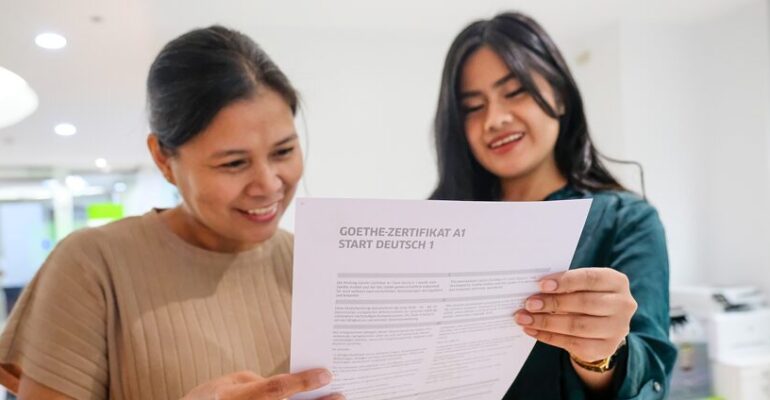

How to Prepare for the Goethe Institut Exam: The Complete Step-by-Step Guide
Introduction: Why the Goethe Institut Exam Is Worth Every Hour of Preparation
I still remember the feeling of sitting down for my first Goethe Institut exam. The room was quiet. The papers were clean and neatly organized on the desk. And despite months of studying, my hands were shaking slightly — not from fear, but from the weight of knowing how much this certificate mattered.
The Goethe Institut German language exams are among the most respected language certifications in the world. Whether you are preparing for the Goethe-Zertifikat A1, pushing toward B2 for a work visa, or aiming for the advanced C1 or C2 for university admission in Germany, this exam has the power to open doors that would otherwise remain closed.
But here is the thing most people get wrong: they treat Goethe exam preparation like general German language study. They review grammar, memorize vocabulary, watch some German videos, and hope for the best. What they miss is that the Goethe Institut exam is a specific, structured test with a specific format, a specific scoring system, and specific skills it rewards. General German study helps, but targeted preparation is what actually gets you the certificate.
In this guide, I am going to give you everything. A breakdown of the exam structure, the best free and paid resources available, a realistic study plan, skill-specific strategies, and the mental preparation that most guides completely ignore. By the time you finish reading this, you will know exactly what to do and in what order to do it.
What Is the Goethe Institut Exam?
The Goethe Institut is Germany’s official cultural institute, present in over 98 countries worldwide. Among its many activities, it administers the globally recognized Goethe-Zertifikat series of German language proficiency exams, which are aligned with the Common European Framework of Reference for Languages (CEFR).
These exams are accepted by German embassies for visa applications, by universities in Germany, Austria, and Switzerland for admission, by employers across Europe and beyond, and by immigration authorities for residency and citizenship applications.
The Full Range of Goethe-Zertifikat Exams
| Exam | CEFR Level | Who It Is For |
|---|---|---|
| Goethe-Zertifikat A1: Start Deutsch 1 | A1 | Complete beginners, family reunification visa |
| Goethe-Zertifikat A1: Fit in Deutsch | A1 | Young learners under 16 |
| Goethe-Zertifikat A2 | A2 | Elementary learners |
| Goethe-Zertifikat A2: Fit in Deutsch | A2 | Young learners |
| Goethe-Zertifikat B1 | B1 | Independent users, citizenship requirement |
| Goethe-Zertifikat B2 | B2 | Work visa, university preparation |
| Goethe-Zertifikat C1 | C1 | Advanced professionals, university admission |
| Goethe-Zertifikat C2: Großes Deutsches Sprachdiplom | C2 | Near-native mastery |
Each of these exams follows the same general structure but increases dramatically in complexity, vocabulary range, grammatical depth, and the sophistication of ideas you are expected to express and understand.
Understanding the Exam Structure Before You Study Anything
This is the step most candidates skip, and it is one of the most costly mistakes you can make. Before you open a single textbook or study a single vocabulary list, you need to understand exactly what the exam tests, in what format, and for how long.
All Goethe-Zertifikat exams test four core language skills:
1. Lesen (Reading Comprehension)
You will read a variety of authentic German texts — newspaper articles, advertisements, emails, schedules, announcements, and more — and answer comprehension questions. At lower levels, texts are short and straightforward. At C1 and C2, you will encounter dense academic and literary texts that require a sophisticated command of German vocabulary and reasoning.
What the exam tests: Your ability to extract specific information, understand the main idea, infer meaning from context, and distinguish between facts and opinions.
2. Hören (Listening Comprehension)
You will hear audio recordings — announcements, conversations, radio segments, interviews, speeches — and answer questions based on what you heard. Each recording is played once or twice depending on the level. The accents, pace, and complexity increase with each level.
What the exam tests: Your ability to follow natural spoken German, understand implied meaning, identify specific details, and process information in real time without pausing or rewinding.
3. Schreiben (Writing)
You will complete one or more writing tasks. At lower levels, this might involve filling out a form, writing a short message, or responding to an email. At higher levels, you will write formal letters, essays, reports, and structured arguments on complex topics.
What the exam tests: Your grammar accuracy, vocabulary range, text organization, coherence, register (formal vs. informal), and ability to communicate your ideas clearly in written German.
4. Sprechen (Speaking)
You will complete oral tasks, typically in a small group or with an examiner. Tasks include describing images, expressing opinions, making suggestions, negotiating, and discussing abstract topics. At higher levels, you are expected to argue a position, defend it under questioning, and engage in nuanced discussion.
What the exam tests: Your fluency, pronunciation, vocabulary use, grammatical accuracy in speech, and ability to interact naturally and spontaneously in German.
The Best Free Resources for Goethe Institut Exam Preparation
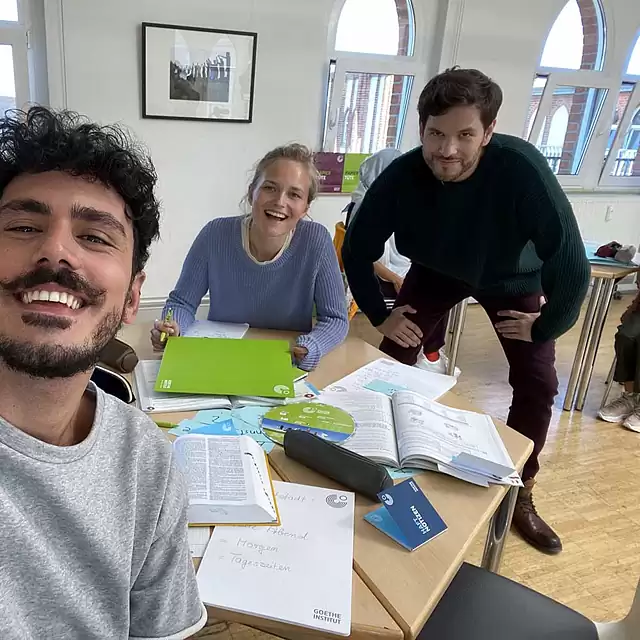
Here is the truth that language schools do not always advertise: you can do an enormous amount of your Goethe Institut exam preparation completely free. The official resources alone are sufficient for most candidates to pass, especially at A1 through B1.
1. The Official Goethe Institut Website — Your First Stop
The most valuable free resource for your Goethe Institut exam preparation is the official website itself: goethe.de
Under the “Deutsch Lernen” (Learn German) section, you will find:
- Free sample exams for every level from A1 to C2, including audio files for listening sections
- Model answers for writing tasks so you can see exactly what a top-scoring response looks like
- Score guides explaining how each component is marked
- Exam tips from Goethe Institut examiners themselves
- Vocabulary lists aligned to each exam level
Download every sample exam for your target level. Complete them under timed exam conditions. This alone will tell you more about your readiness than any textbook exercise.
2. Deutsche Welle (DW) — Free, Comprehensive, and Excellent
Deutsche Welle’s language learning platform at dw.com/en/learn-german is one of the most complete free German learning resources on the internet. It offers:
- Structured courses from A1 to C1 with video, audio, and written components
- Interactive grammar exercises with immediate feedback
- Telenovela-style learning series (like “Nicos Weg” for beginners) that teach German through engaging stories
- “Slow German” news broadcasts for intermediate and advanced learners who want authentic listening practice at a manageable pace
DW content is particularly useful for building the authentic German language skills that the Goethe exam tests — not textbook German, but real, living German as it is actually spoken and written.
3. Goethe Institut YouTube Channel
The official Goethe Institut YouTube channel is consistently underused by candidates. It contains:
- Explanation videos for each exam format
- Sample speaking tasks with model answers
- Pronunciation guides
- Grammar mini-lessons targeting common Goethe exam topics
Watch the speaking sample videos especially carefully. The speaking component is the one that surprises most candidates, and seeing what a strong response actually looks and sounds like is incredibly valuable before your own exam.
4. Lingolia German (lingolia.com)
Lingolia is a completely free online grammar reference that covers German grammar from elementary to advanced level with clear explanations and practice exercises. It is particularly useful for targeting the specific grammar structures that appear repeatedly in Goethe exams — cases (Nominativ, Akkusativ, Dativ, Genitiv), verb tenses, modal verbs, subordinate clauses, and the passive voice.
5. Anki — Free Flashcard App for Vocabulary
No serious Goethe Institut exam preparation is complete without a systematic approach to vocabulary building. Anki is a free spaced-repetition flashcard app that adapts to your memory patterns and shows you words just before you are about to forget them.
Download pre-made Anki decks specifically for Goethe exam vocabulary levels. These decks typically contain the most commonly tested vocabulary at each level and are organized by topic — family, work, travel, health, environment, culture — which mirrors the thematic structure of the exam itself.
Skill-by-Skill Preparation Strategies
General study is good. Targeted, skill-specific practice is what actually moves your score from passing to excellent. Here is how to approach each of the four components strategically.
Mastering Lesen (Reading)
The reading section rewards two things above all others: vocabulary range and the ability to read purposefully rather than exhaustively.
Most candidates read every word of every text, trying to understand everything before answering the questions. This is slow, exhausting, and unnecessary. Train yourself to read the questions first, then scan the text specifically for the information those questions are asking about.
Daily practice habit: Read one German article every day. At A1-B1 levels, use nachrichtenleicht.de — a German news website written in simplified German specifically for language learners and people with reading difficulties. At B2 and above, switch to regular German news sources like Der Spiegel, Die Zeit, or Süddeutsche Zeitung.
The vocabulary strategy: When you encounter an unknown word in a reading text, do not look it up immediately. Try to infer its meaning from context — from the surrounding words, the structure of the sentence, and the overall topic. This inferencing skill is exactly what the reading component rewards. Then check the dictionary and add the word to your Anki deck.
Mastering Hören (Listening)
Listening is the component that most self-study candidates underpreparate for, because it feels passive and hard to improve deliberately. But it is absolutely improvable with the right approach.
The core challenge in German listening — especially above B1 level — is the speed and informality of natural spoken German. Real German speech is nothing like the slow, clear recordings in your textbook. Native speakers contract words, swallow syllables, speak in regional accents, and talk over each other in conversations.
The immersion method: Spend at least 30 minutes every day listening to authentic German audio. Podcasts are ideal because they are convenient and easily adjustable to your level:
- “Slow German mit Annik Rubens” — short, cultural episodes in clear, slightly slowed German, perfect for A2-B2 learners
- “Radio D” by Deutsche Welle — a classic beginner-intermediate series with transcripts available
- “NDR Info” or “Deutschlandradio” — real German radio for advanced B2+ learners
The shadowing technique: This is one of the most powerful listening and speaking improvement methods available. Play a short German audio clip (10–20 seconds). Listen once. Then play it again and speak along with the recording simultaneously, mimicking the pronunciation, rhythm, and intonation exactly. This forces your ear and your mouth to work together and dramatically accelerates both your listening accuracy and your speaking fluency.
Mastering Schreiben (Writing)
The writing component of the Goethe exam is not testing whether you can write perfect German. It is testing whether you can communicate effectively in written German for a specific purpose, using appropriate vocabulary and structure for the register required.
This distinction matters enormously. A candidate who writes simple but correct sentences will often score higher than one who attempts complex constructions full of grammatical errors. Clarity and accuracy beat ambition every time.
Build a template library: For every type of writing task at your level, create a flexible template. For a formal letter, learn the standard German greeting and closing formulas. For an opinion essay, practice a structure like: introduction with your main position → argument 1 with example → argument 2 with example → counterargument acknowledged → conclusion restating your position.
Write every day: Even three sentences counts. Write about your day, react to a news article in German, or respond to a practice writing prompt from the official Goethe sample exams. The key is consistency. Daily writing — even brief writing — builds fluency faster than occasional long sessions.
Get feedback: Writing without feedback is only half useful. Find a language exchange partner, use an app like Tandem or HelloTalk, or hire an affordable online tutor to correct your writing samples. Even one weekly correction session will dramatically accelerate your improvement.
Mastering Sprechen (Speaking)
Speaking is the component that produces the most anxiety among Goethe exam candidates — and also the one that responds most dramatically to targeted preparation.
The speaking component typically involves two or three tasks: a monologue (describing a photo or presenting a topic), a dialogue or discussion (with a partner or examiner), and sometimes a planning task where you negotiate a solution with another candidate.
Practice speaking alone first: Before you feel comfortable speaking with others, build your oral muscle through self-talk. Describe photos in German. Summarize a podcast episode out loud. Argue both sides of a simple topic. This removes the social pressure and lets you focus purely on language production.
Record yourself weekly: Use your phone to record one minute of spoken German every week. Listen back critically: Are you speaking in complete sentences? Are you using vocabulary correctly? Is your pronunciation understandable? Save the recordings and compare them over time. Hearing your own progress is one of the most powerful motivational tools available.
Simulate the actual exam format: In the weeks before your exam, practice the exact speaking tasks from official Goethe sample exams. Time yourself. Stand or sit in a formal posture. Speak to an imaginary examiner. The more you simulate real exam conditions, the more natural the actual exam will feel on the day.
A Realistic 12-Week Study Plan for Goethe Institut Exam Preparation
This plan assumes you have approximately 45–60 minutes of study time per day. Adjust it to your schedule, but do not compress it significantly — language acquisition takes time and consistency above all else.
Weeks 1–2: Foundation and Diagnosis
Take the official free sample exam from the Goethe Institut website without any preparation. Score yourself honestly. Identify your strongest and weakest components. This is your baseline.
Spend the rest of these two weeks reviewing the exam format thoroughly, setting up your Anki vocabulary deck, and establishing your daily listening habit with a podcast at your level.
Daily routine:
- 15 min: Anki vocabulary review
- 15 min: Grammar study (Lingolia or Deutsche Welle exercises)
- 15 min: Listening practice
Weeks 3–6: Targeted Skills Building
Dedicate 60% of your study time to your diagnosed weakest area while maintaining regular practice in your stronger areas. Work through Deutsche Welle’s structured course at your target level systematically.
Daily routine:
- 20 min: Focused practice on weakest skill
- 20 min: Mixed skills practice (rotate reading, listening, writing daily)
- 10 min: Anki vocabulary + new words from study sessions
- Weekend: One extended writing task with self-correction or partner feedback
Weeks 7–9: Integrated Practice and Mock Exams
Begin practicing all four skills together in a single study session rather than in isolation. Complete at least two full timed mock exams from official Goethe sample materials. Review every wrong answer carefully and identify the underlying rule or vocabulary gap it reveals.
Daily routine:
- 30 min: Integrated skills practice
- 15 min: Speaking practice (self-talk or with a language partner)
- 15 min: Vocabulary consolidation
Weeks 10–11: Exam Simulation and Refinement
Take a full mock exam every four days under strict timed conditions. Between exams, review your performance and target the specific question types that consistently give you trouble. Practice speaking tasks daily with a language partner or tutor if possible.
Daily routine:
- Alternate between full mock exams and targeted review
- Daily speaking practice of at least 10 minutes
- Continue daily listening immersion
Week 12: Consolidation and Mental Preparation
Stop introducing new material. Review your mistake journal, consolidate your vocabulary, and practice staying calm and focused under exam conditions. Get adequate sleep. Reduce study intensity slightly in the final three days to let your brain consolidate everything it has learned.
Daily routine:
- 20 min: Light review of your strongest areas to build confidence
- 10 min: One speaking practice task
- Rest and mental preparation
Common Mistakes Candidates Make in Goethe Institut Exam Preparation
Learning from other people’s mistakes is faster and less painful than making them yourself. Here are the most common errors that prevent candidates from passing — or from scoring as highly as they could.
Studying German in general instead of the exam specifically.
General German study is valuable, but in the final 4–6 weeks before your exam, switch to exam-focused practice. Work with official sample exams. Practice within time limits. Study the specific vocabulary themes that appear in your target level’s exam.
Ignoring the writing component until it is too late.
Writing requires a long feedback loop to improve — you write, someone corrects it, you internalize the feedback, you write again. If you start working on your writing two weeks before the exam, that is not enough time. Start writing regularly from week one.
Underestimating the B2 and C1 jump.
Many candidates sail through A1-B1 and then hit a wall at B2. The jump from B1 to B2 is the largest qualitative leap in the entire CEFR scale. At B2, the exam begins testing your ability to handle abstract ideas, complex grammar, nuanced vocabulary, and sophisticated argumentation. Plan for B2 preparation to take significantly longer than lower levels.
Not practicing timed conditions until the week before.
Time management is a genuine skill in exam conditions. Practice completing each section within the official time limits from early in your preparation — not just in the final week.
Final Thoughts: The Goethe-Zertifikat Is Within Your Reach
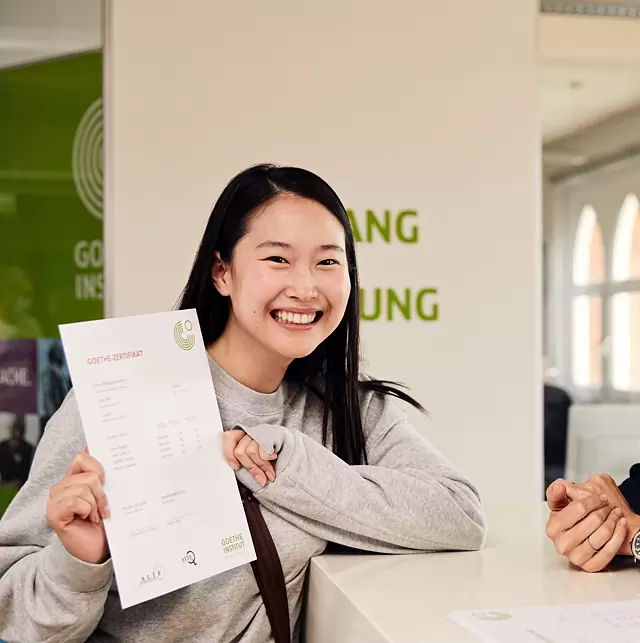
The Goethe Institut exam is rigorous. It is designed to be a genuine, reliable measure of German language ability, which is exactly why it is so widely respected. But rigorous does not mean impossible. Hundreds of thousands of candidates pass the Goethe-Zertifikat every year — at every level, from every language background, in every country.
The difference between those who pass and those who do not is rarely talent. It is almost always the quality and consistency of their preparation.
You now have everything you need: the resources, the strategy, the study plan, and the skill-specific techniques. The only thing left is to start.
Open the Goethe Institut website today. Download the free sample exam for your target level. Take it cold and see where you stand. Then build your preparation plan around that honest starting point.
One month from now, you will be significantly closer to that certificate than you are today. And every day of consistent effort brings the finish line a little nearer.
Drop a comment below: Which Goethe-Zertifikat level are you preparing for, and when is your exam?


